Experience it
Room 7, 2:40 PM.
Every number is inside the normal range. But you've had her since yesterday, and something makes you pause at the door.
Step into the moment and watch your own recognition become observable.
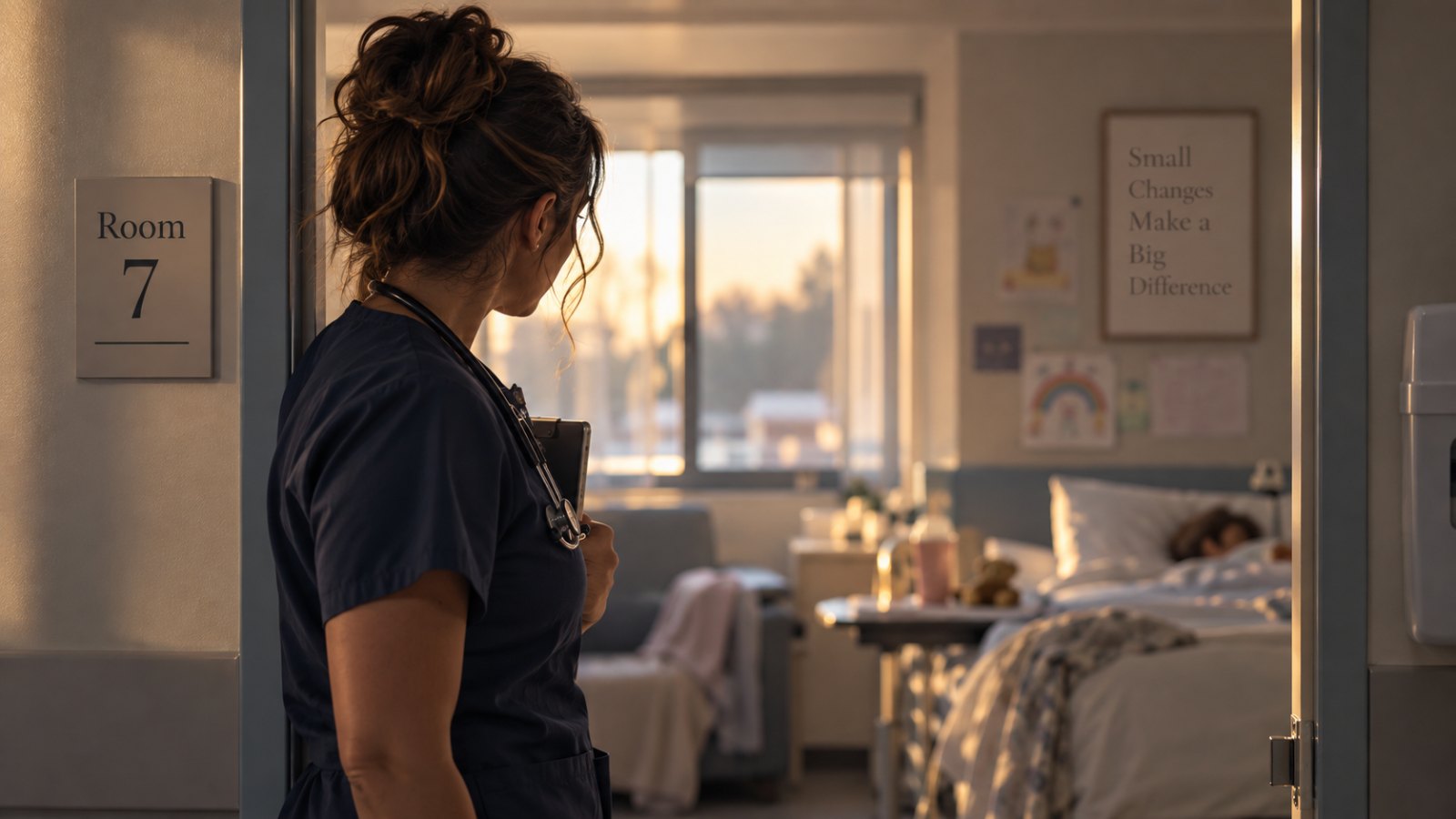
It's early recognition, before the data catches up.
The Clinical Intuition System structures how clinicians detect meaningful change, articulate what they're noticing, and act before thresholds are crossed.
It begins with subtle deviations from baseline — a change in color, in breathing, in the person themselves. Clinicians notice long before the monitors confirm it. CIS™ gives that noticing a shared language and structure, so recognition can become action earlier.
TRM-4™ → VOICE™ → CRISP™ ↻
Recognize. Communicate. Act. Calibrate. Recognize better next time.
Detecting deviation from baseline before it becomes obvious. The bridge between noticing and understanding.
Turning early recognition into clear, actionable communication. Because if something is not voiced, the system cannot respond to it.
Turning clinical experience into structured reflection, calibration, and increasingly reliable recognition over time.
Every number is inside the normal range. But you've had her since yesterday, and something makes you pause at the door.
Step into the moment and watch your own recognition become observable.
Could the system see what they saw?
CIS™ is an organizational system for making clinical cognition visible, communicable, trainable, and structurally supportable. It provides shared language, structured cognitive training, and a pathway from early recognition to communication, action, reflection, and recalibration.
Recognition begins with the clinician.
Response depends on the system.
CIS™ gives early recognition a shared language, structure, and pathway forward — so what clinicians notice can become something the organization can act on.